Changing flow range
- Low-flow vortex signals can be small
- One fixed cutoff can remove useful information
- Higher flow shifts the expected vortex frequency
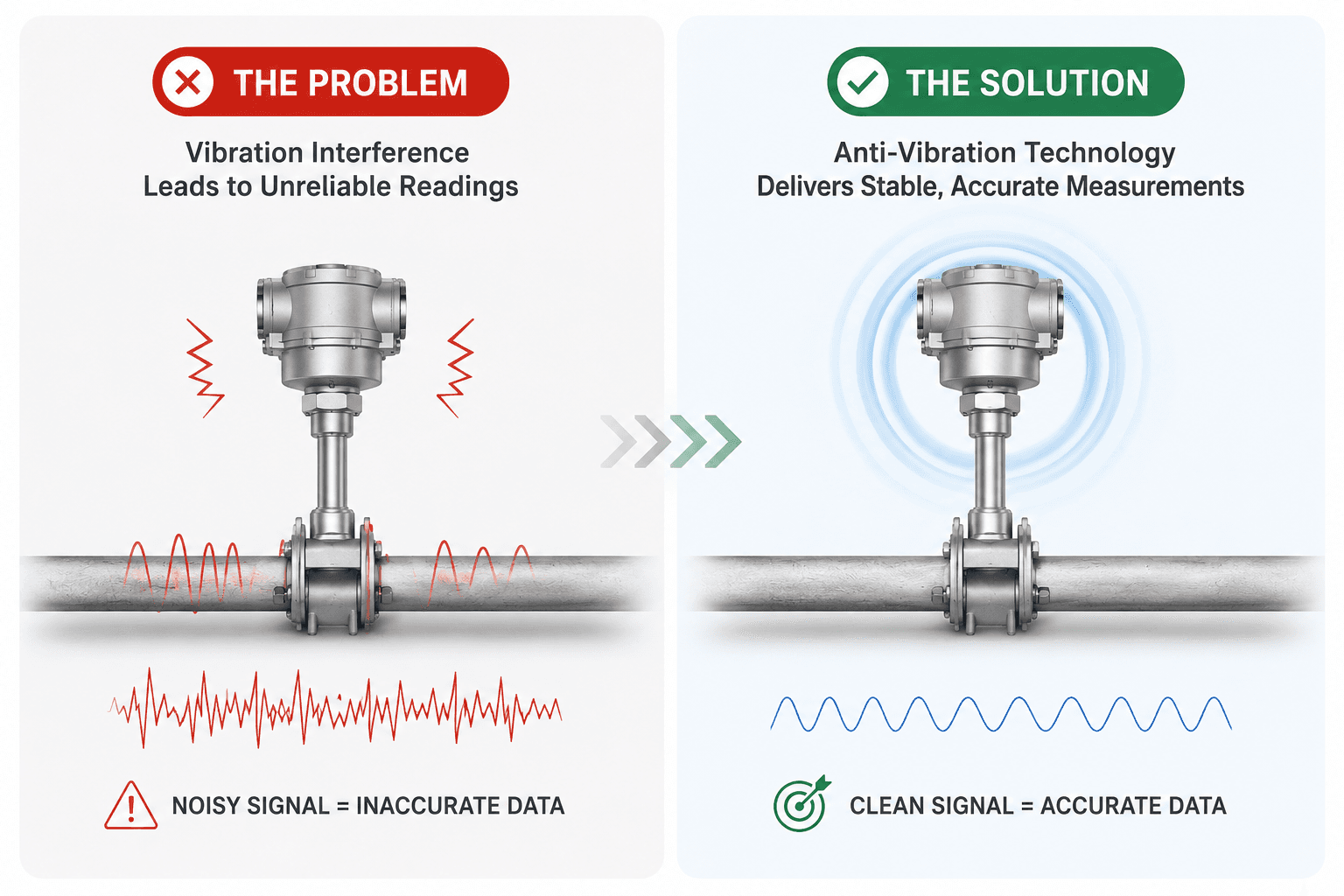
This vortex meter development addresses two separate field problems: changing operating flow and mechanical vibration that can overlap with the true vortex signal, especially near the lower end of the range.
Development Approach
Test Setup
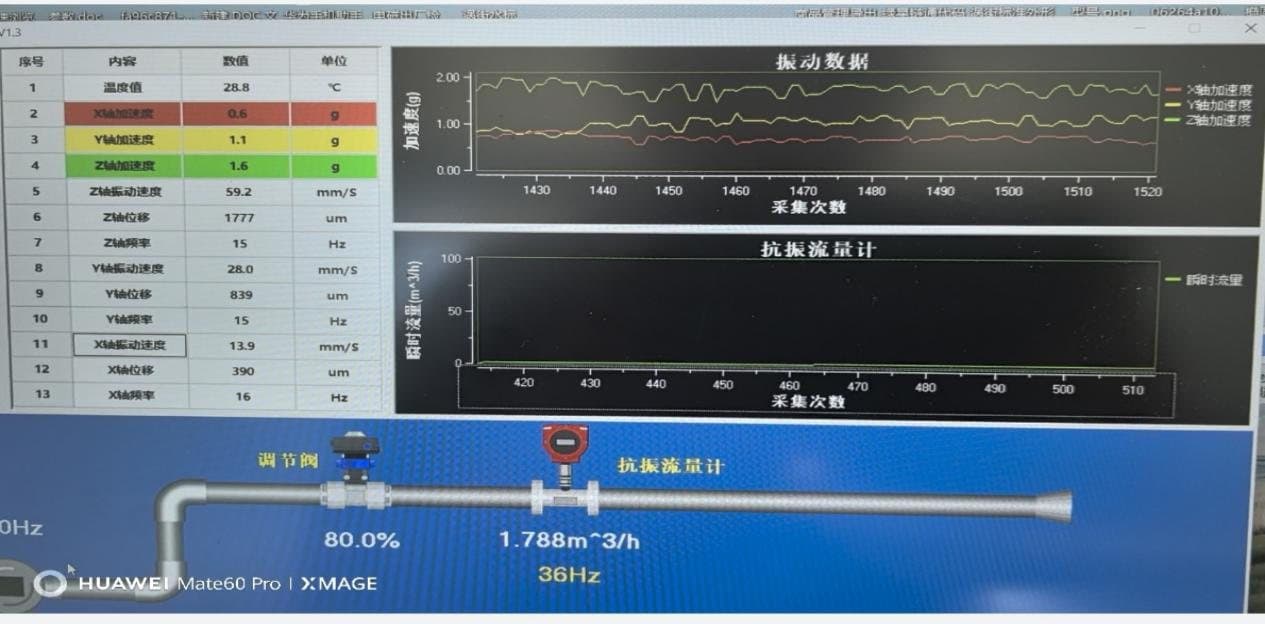
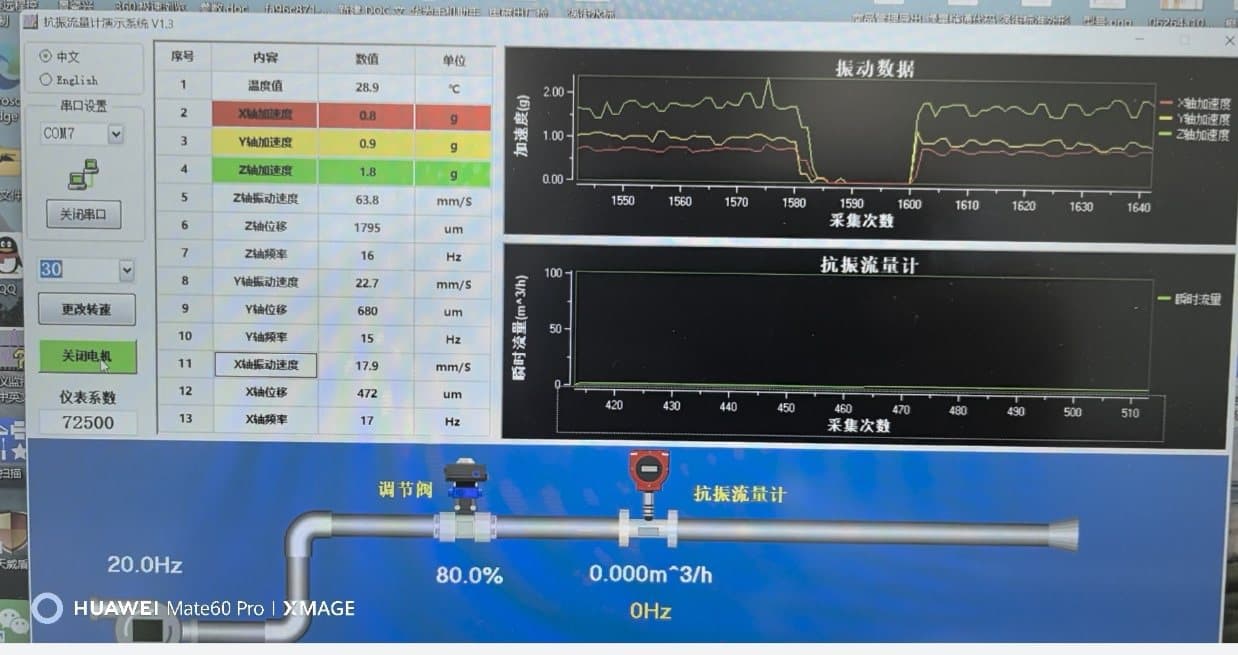
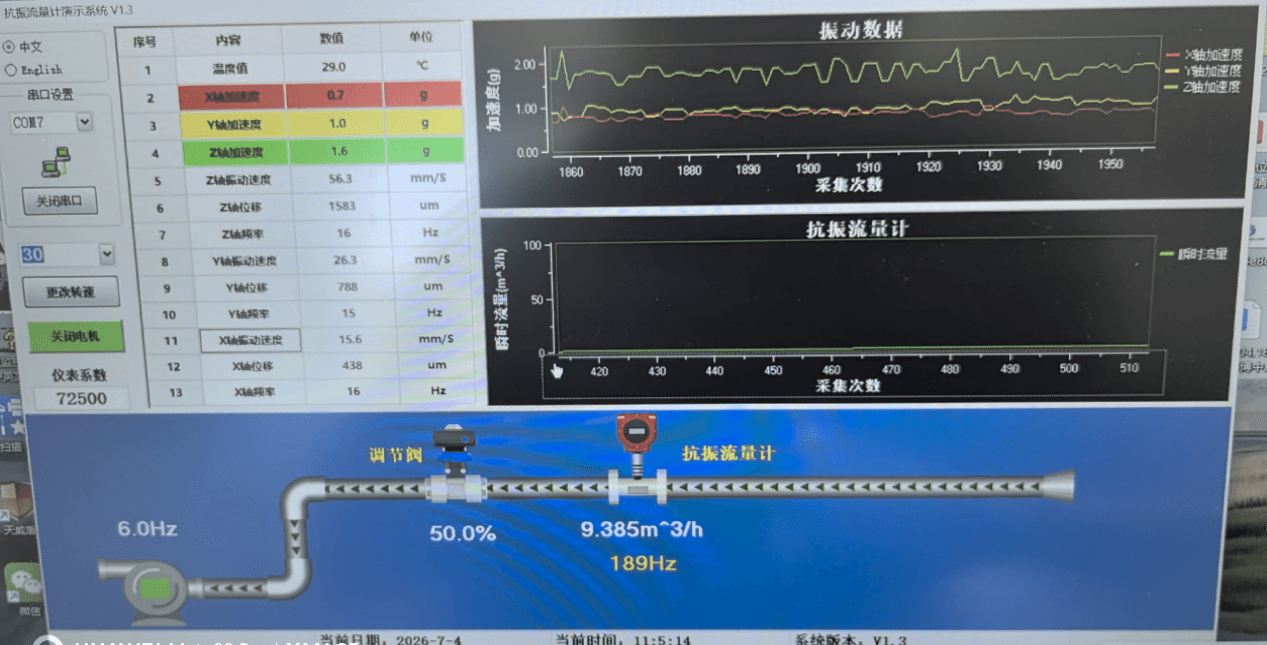
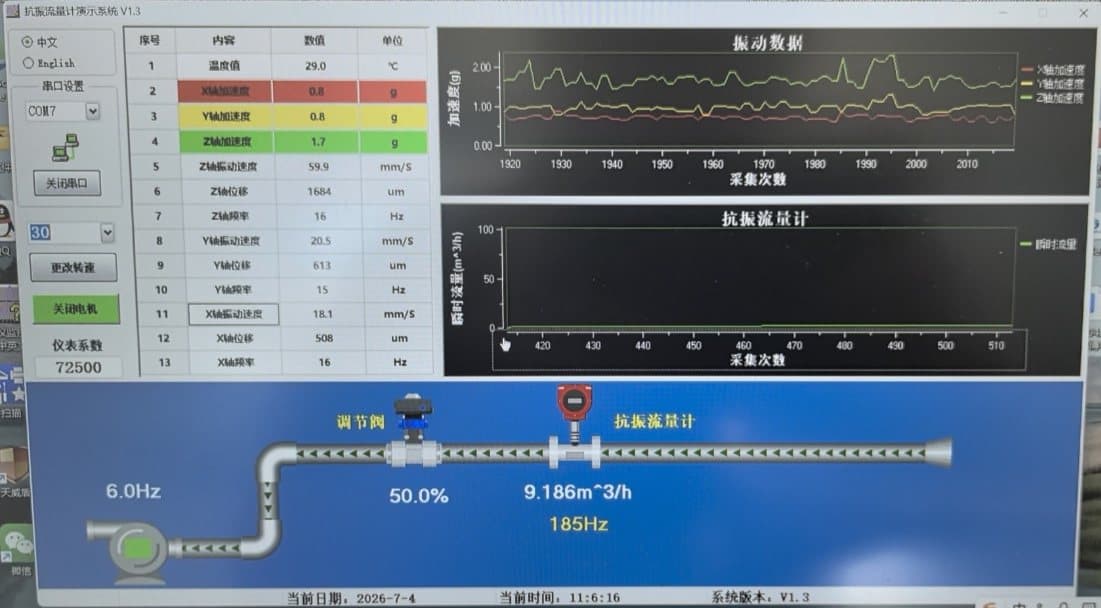
A representative program used the in-house airflow and vibration test system to compare the same meter configuration with digital signal-feature analysis disabled and enabled.
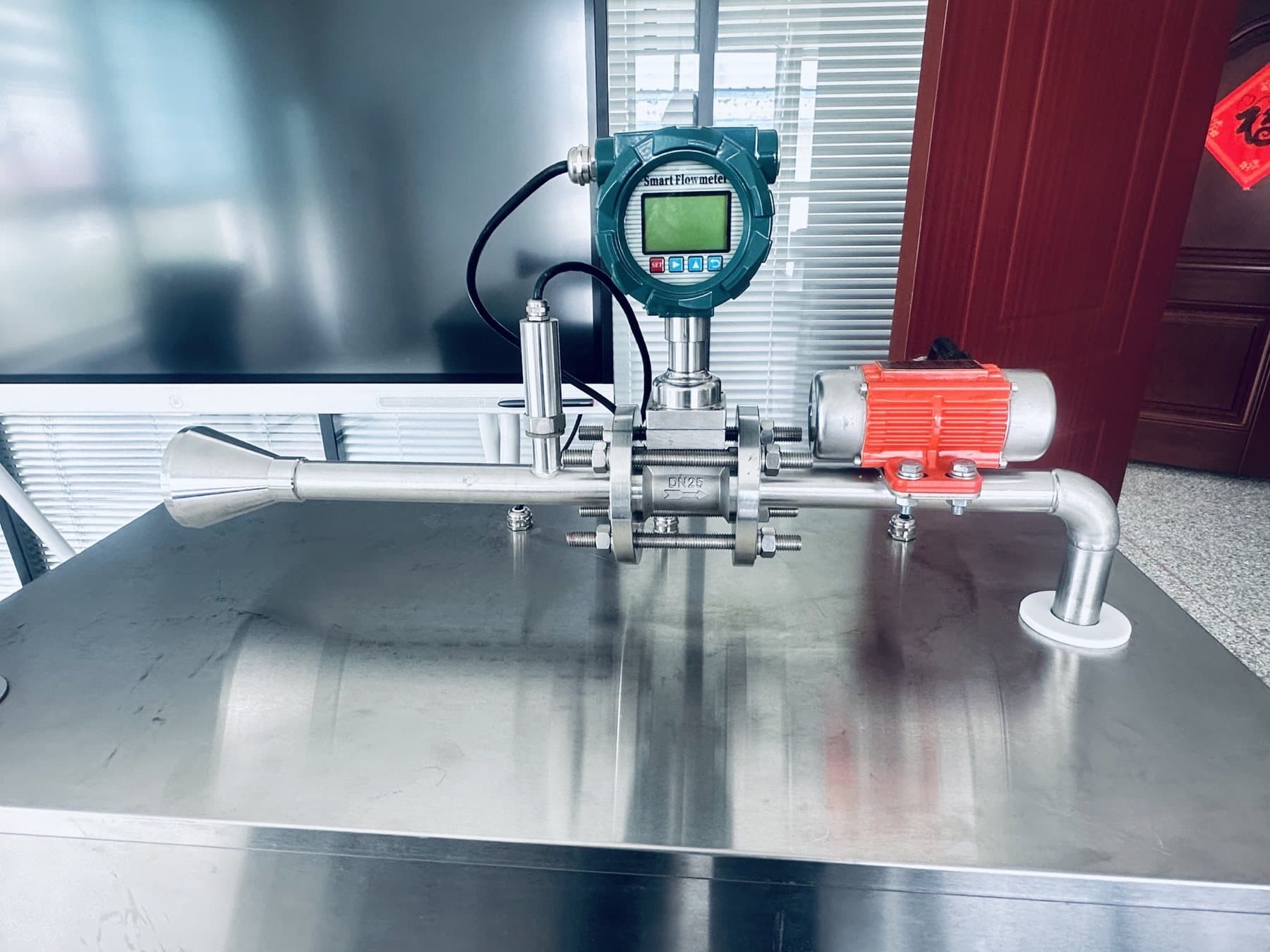
Image-Supported Validation
The screen captures show the two feature states. Values shown are tied to the recorded test conditions.
Related Developments
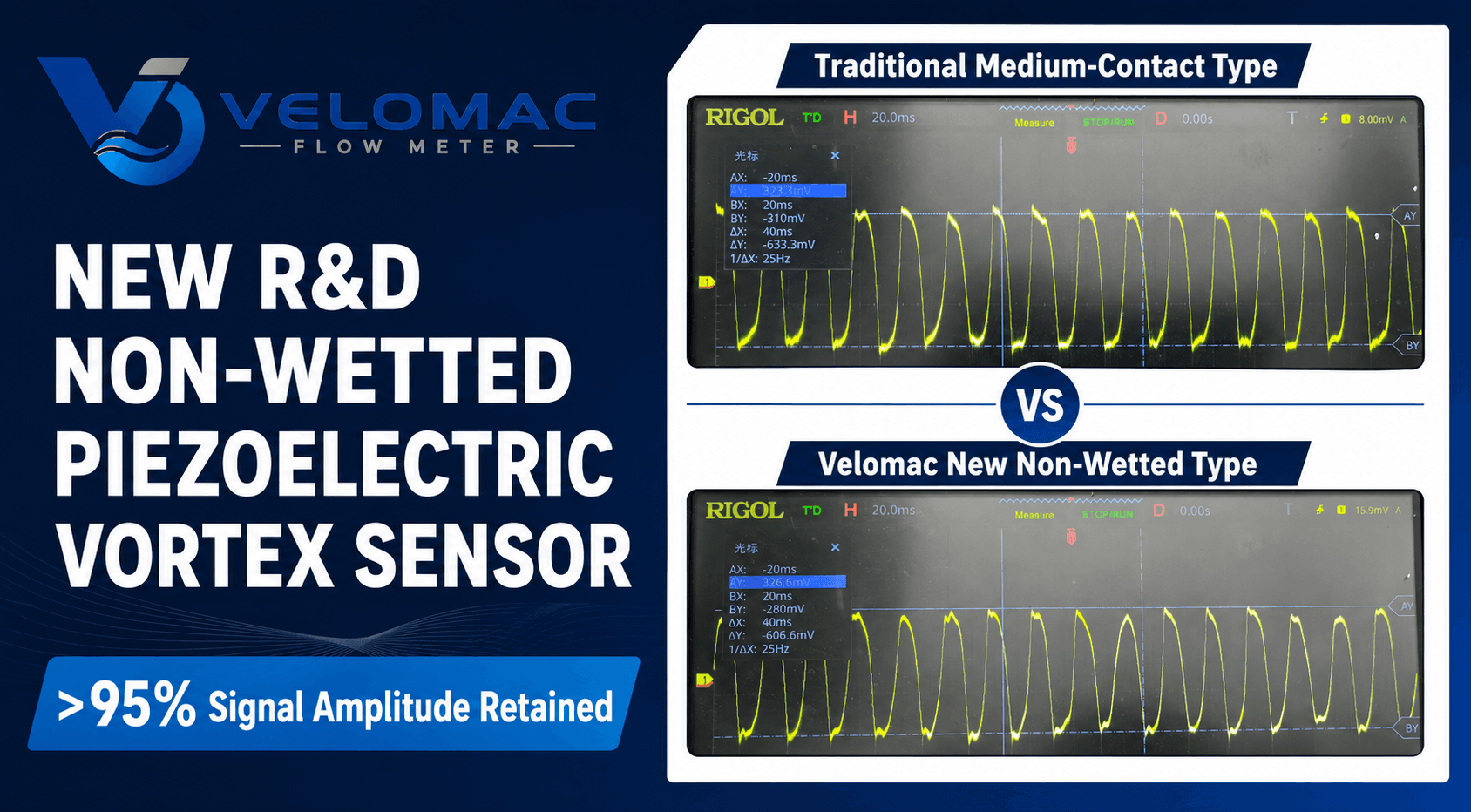
Keeps the piezoelectric element outside direct media contact while retaining the vortex signal.
View Details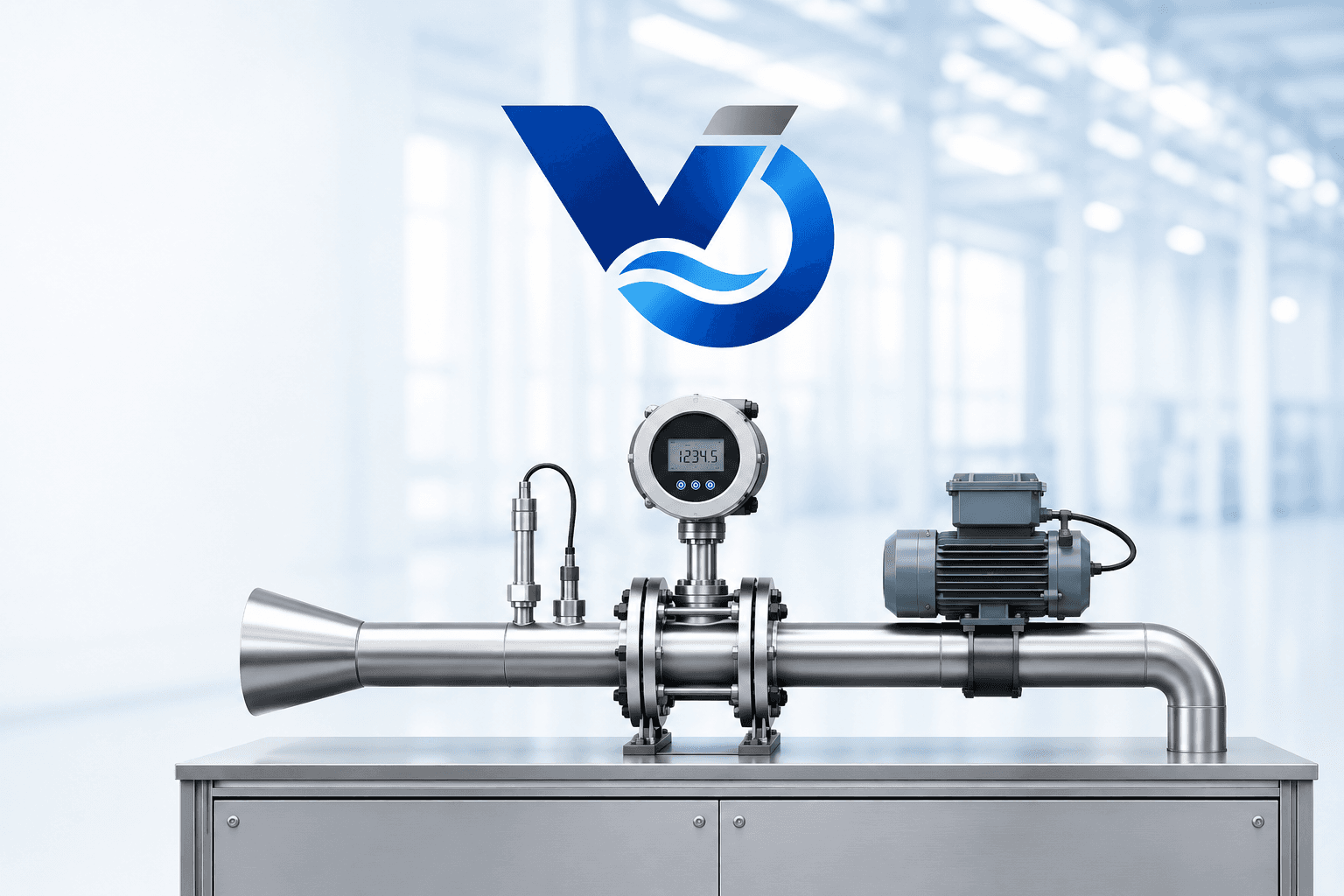
Applies controlled airflow and mechanical vibration while recording the meter response.
View Details
Reviews when a vortex meter can replace an orifice plate in chemical and pharmaceutical utility lines.
View DetailsSelection support
Send the minimum, normal and maximum flow together with the vibration source, pipe layout and operating conditions.