Quick Answer
A wastewater plant upgrade should define a temporary flow map before treatment trains, pipelines, or existing measurement points go offline.
The permanent process design shows how wastewater is expected to move after the upgrade is complete. Construction planning also needs to show how water actually moves during each temporary stage, including influent rerouting, bypasses, active treatment trains, recycle connections, temporary pumps, discharge paths, and commissioning flows.
The measurement plan should follow that temporary hydraulic route.
What Is a Temporary Flow Map?
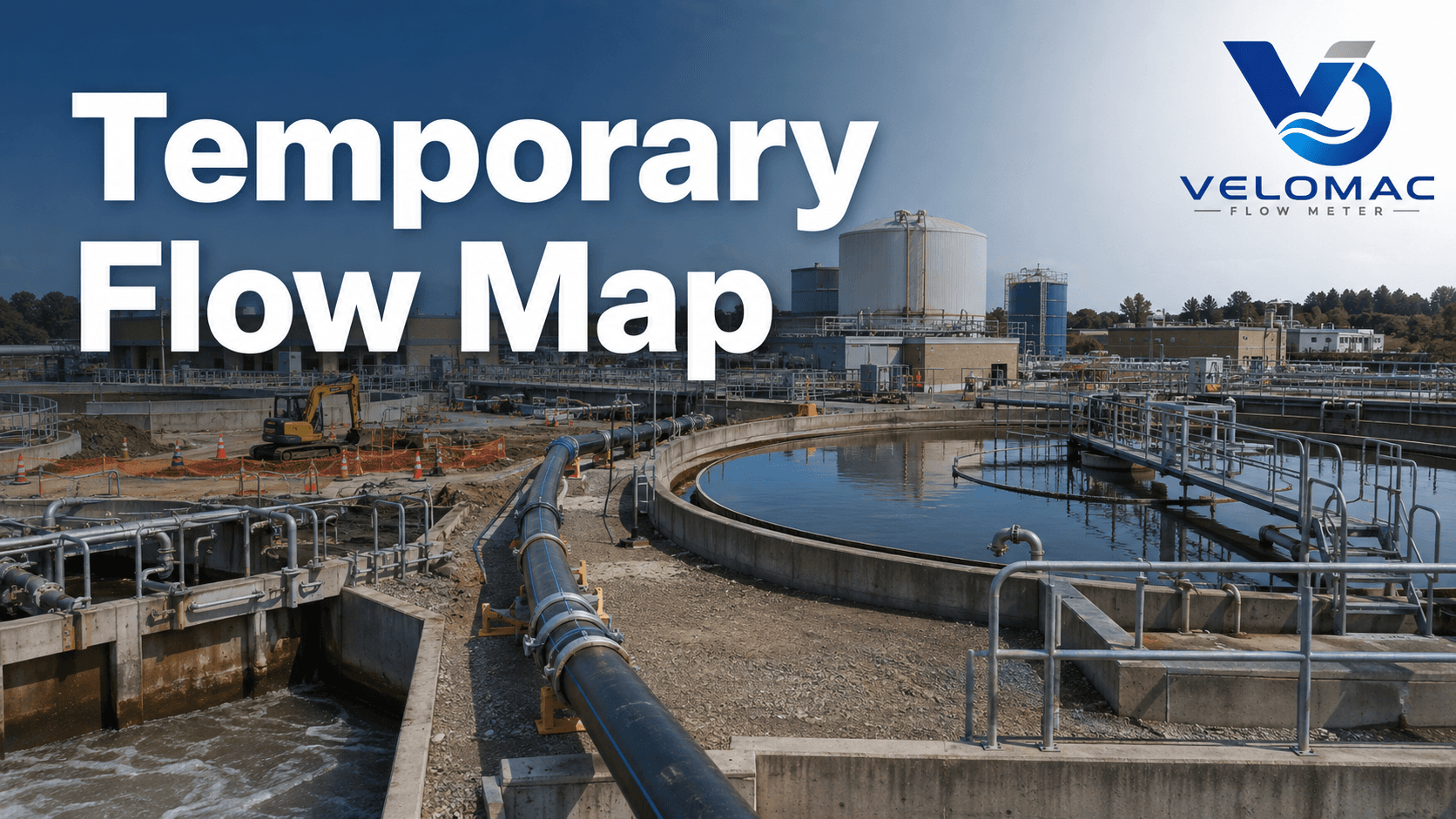
A temporary flow map is a stage-specific view of the actual hydraulic paths used while an operating plant is being modified.
It can differ significantly from the final process arrangement because construction may introduce:
Influent rerouting
Temporary bypass lines
Partial treatment train shutdowns
Reconfigured recycle lines
Temporary pumping
Temporary discharge paths
Commissioning and flushing flows
Parallel operation of existing and new equipment
For instrumentation teams, the key question is where each important flow can still be measured or verified during every construction stage.
Why Temporary Wastewater Flow Measurement Matters
A brownfield plant can retain the same overall inlet and outlet while changing much of the hydraulic route in between.
When an old pipeline is removed, an existing measurement point may disappear with it. When a bypass opens, part of the plant flow may move outside the normal measurement boundary. When fewer treatment trains remain active, the flow range through the remaining lines can also change.
Temporary wastewater flow measurement therefore belongs in shutdown and staged-construction planning. It should be reviewed before temporary piping, pump arrangements, and isolation sequences are finalized.
Where the Flow Map Changes During an Upgrade
Influent rerouting
Incoming wastewater may be redirected around a construction area or divided between the treatment trains that remain in service.
The team should confirm whether the original influent measurement still represents the complete incoming plant volume after rerouting begins.
Temporary bypass
A bypass can move flow around tanks, pipelines, or process sections that normally sit inside the plant measurement boundary.
Its minimum and peak flow should be defined early, together with the pipe size, full-pipe condition, installation access, and intended measurement period.
Partial treatment train shutdown
When individual trains go offline, the remaining trains may operate under a different hydraulic loading.
Existing flowmeters should therefore be checked against construction-stage minimum, normal, and peak flow rather than only the final plant operating range.
Recycle line changes
Recycle streams may be redirected as tanks, pumps, or pipelines are rebuilt.
That can change both the measurement location and the expected flow range at the remaining active connections.
Temporary pumping
Temporary pumps can become an important link between influent, bypass, active treatment, and discharge sections.
Where pump flow needs to be documented, the project team should define how that flow will be measured or verified and whether the data is needed only for field decisions or also for commissioning records.
Commissioning and flushing
New pipelines and equipment may introduce flushing flows and temporary operating states before permanent operation begins.
These conditions should be included in the temporary flow map so that the selected measurement range reflects the actual construction and commissioning stage.
Current Project Context
VINCI has announced a €192 million upgrade of Prague's central wastewater treatment plant. Construction is planned to begin in October 2026 and continue for 43 months.
The facility has been operating for more than 50 years. The project includes reconstruction of eight of the plant's 20 settling tanks, renovation of four more, demolition or reconstruction of 40 structures, and installation of new treatment technologies.
A staged project of this scale illustrates the measurement question clearly: while active wastewater infrastructure is rebuilt, the influent, bypass, recycle, temporary pumping, and final effluent routes still need clearly defined measurement boundaries.
What Plant and EPC Teams Should Check Earlier
Before the shutdown sequence and temporary piping arrangement are finalized, review the measurement points together with the construction plan.
Check:
Which permanent flowmeters remain active during each stage
Which measurement points disappear when existing pipelines are removed
Where each temporary bypass starts and ends
Minimum, normal, and peak flow through temporary routes
Whether temporary pipelines remain fully filled
Whether influent, bypass, active treatment trains, and final effluent can still be compared across defined volume boundaries
How temporary pump flow will be confirmed
How new meter data will connect with the previous measurement record
Whether temporary measurement supports field operation only or also construction and commissioning records
Which existing large pipes offer suitable access for non-intrusive flow verification
These questions define the real measurement requirement before product selection begins.
What Information Engineers Should Prepare
For each temporary or permanent measurement point, prepare:
Medium and wastewater characteristics
Pipe size
Pipe material
Conductivity where relevant
Solids condition
Minimum flow
Normal flow
Peak flow
Full-pipe condition
Available installation access
Available straight-pipe conditions where relevant
Temporary or permanent use
Required measurement duration
Required signal output
PLC or DCS connection requirements
Construction and commissioning stage
A meter selected around the final plant condition may face a different flow envelope during staged construction, so temporary and permanent operating conditions should be reviewed separately.
How Temporary Flow Conditions Affect Flowmeter Selection
Temporary flowmeter selection should follow the route that is active during the specific construction stage.
For an existing large water or wastewater pipe, retrofit access may be the main constraint. The team should confirm whether the pipe remains fully filled, whether the location is accessible, and whether the expected minimum and peak flows fit the selected measurement approach.
For a new conductive wastewater pipeline, the permanent meter may become part of both commissioning and final plant operation if the installation timing, full-pipe condition, medium properties, and flow range are suitable.
The measurement purpose also matters. A temporary point used for field verification may have different data requirements from a permanent point connected to the plant control system.
Which Approved Velomac Products May Be Relevant?
Ultrasonic Flowmeter
An Ultrasonic Flowmeter may be considered for suitable fully filled existing or temporary large water and wastewater lines, particularly where retrofit access or non-intrusive field verification is part of the project plan.
Review pipe size, pipe condition, full-pipe status, flow range, installation access, and the intended measurement period before selection.
Electromagnetic Flowmeter
An Electromagnetic Flowmeter may be considered for new conductive wastewater or water pipelines when conductivity, solids condition, material compatibility, flow range, and full-pipe installation conditions are confirmed.
For a permanent new line, the same measurement point can continue into final plant operation after commissioning when the application conditions remain within the selected range.
Keeping Temporary Measurement Boundaries Clear
A useful temporary flow map should show more than individual meter locations.
It should identify the measurement boundary around the flows that matter during each stage: plant influent, temporary bypass, active treatment trains, recycle paths, temporary pumping, and final effluent.
Where volume reconciliation is required, teams should also align the measurement period, totalizing period, and the start and end points of each boundary.
Storage volume, recycle flows, intermittent pumping, and changing operating states can affect short-term comparisons, so the reconciliation method should be defined before the data is used for construction or commissioning decisions.
What Velomac Usually Reviews
For brownfield wastewater flowmeter retrofit applications, Velomac can review:
Medium and wastewater characteristics
Pipe size and pipe material
Minimum, normal, and peak flow
Full-pipe condition
Conductivity and solids where relevant
Existing versus temporary pipeline
Installation access
Available measurement location
Signal output requirements
Temporary versus permanent measurement purpose
Construction and commissioning stage
This application review confirms whether the measurement point and operating conditions are suitable before flowmeter selection begins.
Practical Checklist
Before a wastewater treatment train goes offline, confirm:
The temporary hydraulic route is shown on the construction-stage flow map
Every important active flow path has a defined measurement or verification method
Measurement points lost with removed pipelines have been identified
Temporary bypass minimum and peak flow are defined
Temporary pump flow requirements are defined
Full-pipe conditions are confirmed
Existing and new measurement boundaries are documented
Construction-stage flow ranges are reviewed separately from final operation
Measurement periods are aligned when volume reconciliation is required
New meter commissioning includes a clear transition from the previous measurement record
Temporary measurement locations have suitable installation access
Permanent meters are checked against commissioning and final operating conditions
Common Questions
Why is the permanent flow diagram insufficient during a brownfield upgrade?
The permanent diagram represents the completed plant. During construction, wastewater may move through temporary bypasses, pumps, and partially active treatment trains that are outside the final operating arrangement.
When should the temporary measurement plan be prepared?
It should be reviewed alongside shutdown sequencing, temporary piping, and staged construction planning, before existing measurement points are removed or isolated.
Can existing large wastewater pipes be verified before a permanent new meter is installed?
For suitable fully filled pipes, an Ultrasonic Flowmeter may be considered for retrofit or field verification. Pipe condition, access, flow range, and measurement purpose should be reviewed first.
When is an Electromagnetic Flowmeter relevant?
An Electromagnetic Flowmeter may fit conductive wastewater or water pipelines when conductivity, solids condition, material compatibility, full-pipe status, and operating range suit the application.
Should temporary measurement data become part of the commissioning record?
That depends on the project requirements. EPCs and plant teams should define early whether temporary measurement is intended only for field operation or whether totals and flow records must also support construction handover and commissioning documentation.
Plan the Measurement Route With the Water Route
When temporary piping changes the water route, the measurement plan should change with it.
Velomac provides manufacturer-direct application review. For a similar wastewater retrofit, Velomac can review the medium, pipe size, flow range, full-pipe condition, installation access, and signal requirements before selection.