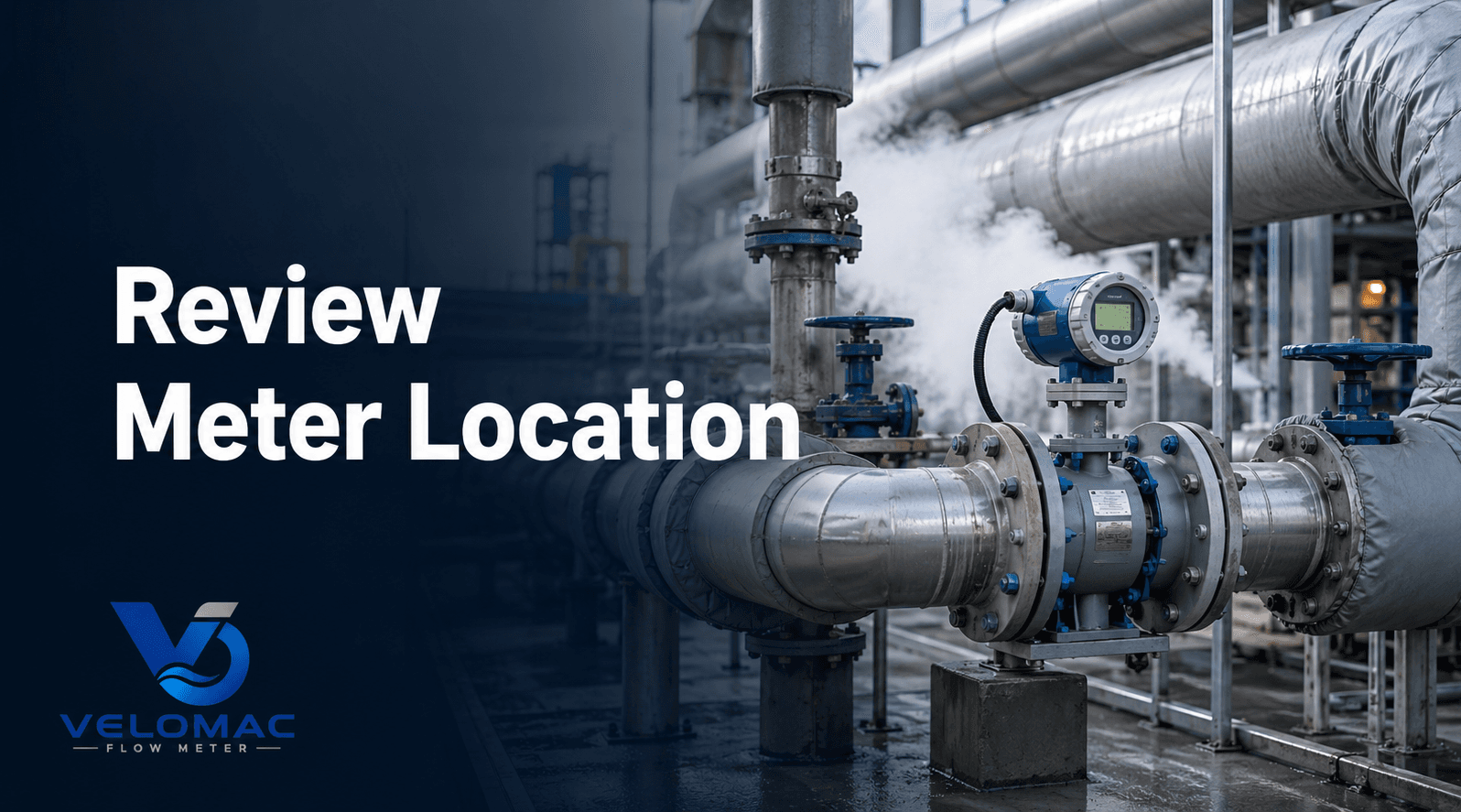
Quick Answer: Review the Steam Flow Meter Location First
When a steam flow reading is being questioned, the first step is to review the measurement point.
That means checking the pipe layout, straight-pipe availability, process condition, vibration, access, signal output, and calibration basis before choosing a replacement meter.
A steam flow meter can be selected correctly on paper and still become difficult to defend in operation if the actual site condition was never reviewed deeply enough.
Why Steam Flow Meter Troubleshooting Matters
Steam flow measurement is often connected to plant utilities, energy management, production balancing, and internal cost allocation.
When the steam number becomes disputed, the issue can quickly move beyond instrumentation. Operations, maintenance, management, and energy teams may all depend on the same reading.
This is why steam flow meter troubleshooting should focus on the full measurement point, not only the product name on the tag.
What Usually Happens in Real Projects
In many plants, the project discussion follows a familiar path.
The steam meter is installed.
The control room receives a number.
Operations starts questioning the value.
Instrumentation checks the selected model.
Management asks for a fast correction.
At that stage, the conversation often moves directly toward replacement. But the useful answer may be in the site condition rather than in the meter body itself.
Key Terms to Define Before the Review
Straight run means the length of stable pipe available before and after the flowmeter. Elbows, valves, reducers, strainers, and other fittings can disturb the flow profile.
Signal output means the way the meter sends the measured value to the control system. Common options include 4-20 mA, pulse, RS485, HART, and Modbus, depending on the selected model and system architecture.
Calibration basis means how the meter was verified before use and how the plant can defend the reading later during energy review, audit discussion, or internal troubleshooting.
Why the Measurement Point Shapes the Steam Number
A steam flow meter does not work in isolation. It reads what the pipe condition allows it to read.
The following site factors can affect how useful the reading becomes:
Pipe layout around the meter
Available straight pipe
Steam pressure and temperature condition
Wet steam or unstable steam quality
Vibration from nearby equipment
Pipe support condition
Access for inspection and maintenance
Signal compatibility with the DCS or PLC
Calibration and documentation available after startup
For plant teams, this review is usually more useful than a fast comparison between meter types.
What Should Be Checked Earlier
A steam flowmeter selection should review the actual installation point before the purchase decision is locked.
Important checks include:
Whether the pipe run can support the selected meter principle
Whether upstream and downstream fittings create flow disturbance
Whether the line has enough access for installation and future service
Whether the steam condition is stable at the measurement point
Whether the site expects mass flow, volumetric flow, totalized flow, or energy-related reporting
Whether the output signal can be used cleanly by the DCS or PLC
Whether shutdown planning allows pipe modification if needed
These checks help the project team decide whether the issue is meter type, meter location, process condition, or system integration.
How This Affects Flowmeter Selection
Steam flowmeter selection should match both the process condition and the installation reality.
For example, a plant may want a standard steam measurement point, but the pipe layout may have limited straight run. Another site may have enough pipe length but strong mechanical vibration. A third site may need the meter reading to support energy reporting through a specific control-system signal.
These are different problems.
A practical flowmeter selection process should identify which problem the plant is really solving.
Which Flowmeter Types May Be Relevant
Different steam measurement points may lead to different flowmeter discussions.
Vortex flowmeters are commonly considered for steam, gas, and liquid service when the process condition and installation layout are suitable.
V-Cone flowmeters may be considered when the plant has challenging straight-pipe limitations and needs a differential pressure based option.
Balanced DP flowmeters may also be considered for difficult layouts where the project needs a more compact differential pressure measurement approach.
Swirl flowmeters may be reviewed for steam or gas applications where dynamic compensation and vibration tolerance are part of the technical discussion.
The right shortlist depends on pipe layout, steam condition, turndown needs, signal requirements, and the plant’s measurement purpose.
Signal Output Should Be Part of the Same Review
A steam flow reading can create confusion when the signal path was not defined clearly.
Before startup, the project team should confirm:
Which signal the control system needs
Whether the meter output matches the DCS or PLC input
Whether totalized flow is needed locally or in the control system
Whether communication protocols are required
Whether energy reporting needs pressure and temperature compensation
Whether the plant needs local display, remote visibility, or both
For process automation teams, the flowmeter signal output is part of the measurement design, not an afterthought.
Calibration Confidence Also Matters
When a plant questions a steam number, it is also questioning the basis for action.
Calibration records help the team understand how the instrument was checked before installation and how the reading can be reviewed later.
For industrial flow measurement projects, calibration discussion should happen before commissioning, especially when the meter supports energy management, production review, or utility balancing.
A clear calibration basis helps engineers explain the number when different teams depend on the same reading.
What Velomac Usually Reviews
For a steam flow measurement review, Velomac usually looks at the full application instead of only the meter model.
Typical review items include:
Pipe size and schedule
Steam pressure and temperature
Flow range and expected operating point
Straight-pipe availability
Upstream and downstream fittings
Vibration and pipe support condition
Installation orientation and access
Required output signal
DCS / PLC integration needs
Calibration and documentation requirements
Shutdown planning for retrofit projects
This helps clarify whether the plant needs a different meter, a different installation point, or a clearer signal and calibration plan.
Practical Checklist
Before replacing a steam flow meter, review these items:
Confirm the real pipe layout, not only the drawing.
Check upstream and downstream straight run.
Review nearby elbows, valves, reducers, and strainers.
Confirm steam pressure, temperature, and operating range.
Check vibration and pipe support condition.
Confirm access for installation and maintenance.
Define the required signal output.
Confirm DCS / PLC input compatibility.
Review whether totalized flow or energy reporting is needed.
Check calibration records and traceability.
Review shutdown limits before planning pipe changes.
Compare meter types only after the site condition is clear.
Common Questions
Why can a steam flow meter reading become disputed?
A steam reading can become disputed when the number is used for energy review, production balancing, or cost allocation and different teams lose confidence in the measurement point.
Should a plant replace the steam flow meter first?
A replacement should come after the site review. The plant should first check pipe layout, straight run, vibration, steam condition, signal output, and calibration records.
How does straight pipe affect steam flow measurement?
Straight pipe helps the flow profile become more stable before it reaches the meter. Limited straight run can make the measurement point more difficult, especially near valves, elbows, or reducers.
Why does signal output matter in steam flow measurement?
The meter reading must reach the control system in a usable format. If the plant needs 4-20 mA, pulse, RS485, HART, or Modbus, that requirement should be confirmed before installation.
Which steam flowmeter types should be reviewed?
Vortex, V-Cone, balanced DP, and swirl flowmeters may all be relevant depending on the pipe layout, steam condition, straight-pipe availability, vibration, and control-system needs.
Practical Closing
A disputed steam number should lead to a disciplined review of the measurement point.
The most useful question is not simply which meter should replace the current one. The better question is what the plant needs the steam number to do and whether the location, process condition, signal path, and calibration basis support that purpose.
Before replacing the meter, review the point that shapes the reading.