
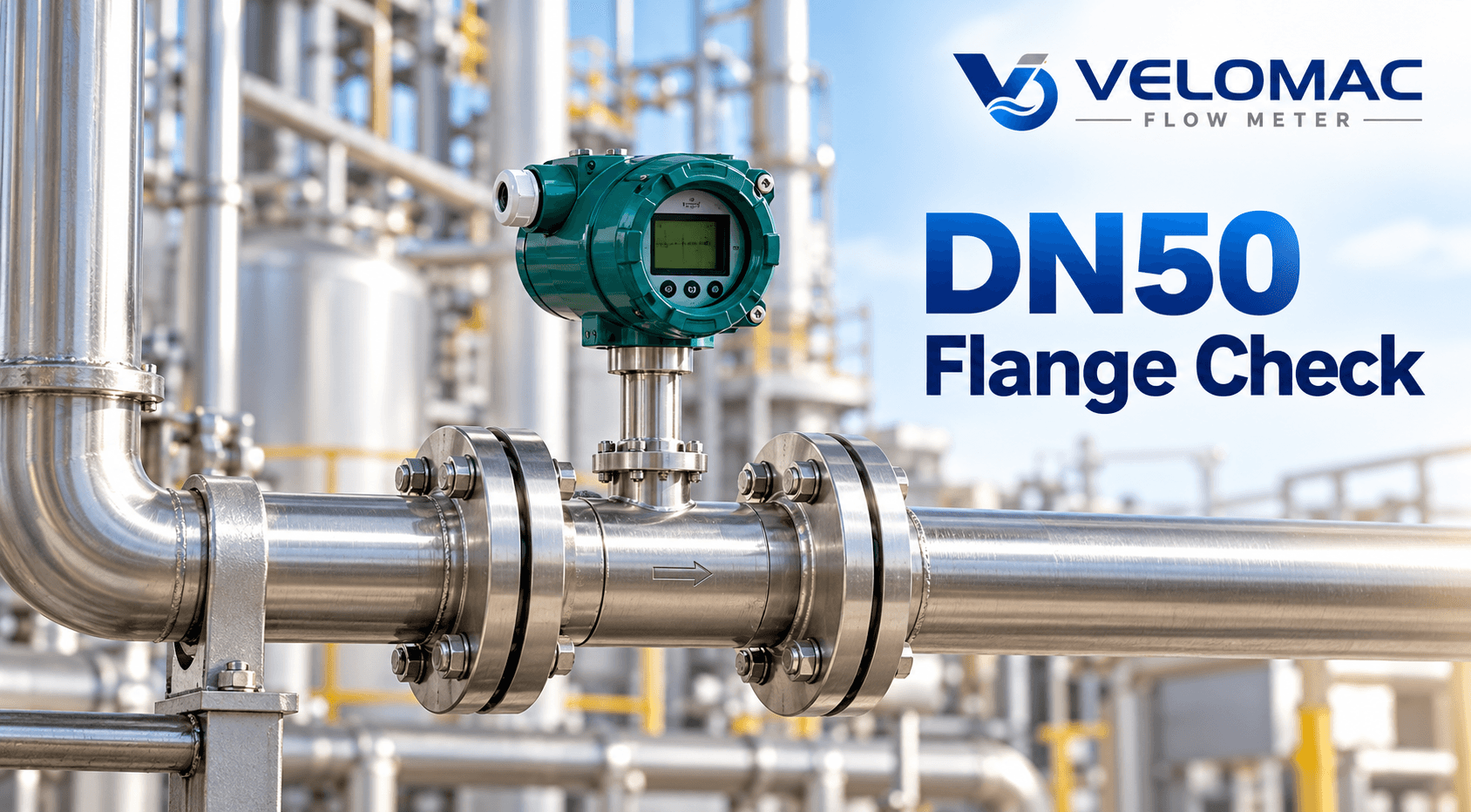
Quick Answer: What Should Be Confirmed Before Manufacturing?
For a DN50 flowmeter specified with an HG/T 20615 CL300 RF flange, SS304 body, 24VDC power supply, 4–20 mA output, and RS485 communication, confirm the flange dimensions, face-to-face length, sealing arrangement, installation clearance, material requirements, process conditions, and electrical interface before manufacturing.
Use the customer's approved piping drawing or applicable flange specification as the dimensional reference. Separately verify the pressure-temperature rating against the specified flange material and operating conditions.
The key question is whether the confirmed configuration matches the customer's pipeline, installation space, and control-system requirements.
Why DN50 Flowmeter Flange Compatibility Matters
A flowmeter specification can look complete while leaving important installation details unresolved.
For example, a buyer may specify DN50, HG/T 20615 CL300 RF, and an SS304 body. These details establish important parts of the required configuration, but the complete order also needs a confirmed dimensional reference, sealing arrangement, installation envelope, and electrical interface.
The face-to-face length may determine whether a replacement meter fits the available pipe section. The flange details determine the required connection geometry. The electrical configuration determines how the instrument connects to the receiving control system.
Confirming these details before manufacturing gives procurement, engineering, production, and inspection teams a shared reference.
It also makes the expected configuration easier to verify before dispatch and installation.
Where These Checks Matter in Industrial Procurement
Replacement Orders
When replacing an existing meter, the new instrument must match the available connection and installation space.
The original dimensional drawing, flange specification, nameplate information, and installation photographs can help establish the required configuration. Where the original drawing is unavailable, measured dimensions and the customer's piping specification can support a preliminary review.
Existing Plant Modifications
Pipework changes can affect the available installation length, connection arrangement, and access for wiring or maintenance.
Reviewing the updated piping drawing alongside the instrument dimensions gives the engineering team a clearer basis for confirming fit before production.
Distributor Stock Orders
Distributors may need a consistent configuration for a defined customer or application.
Recording the flange standard, pressure class, material scope, signal configuration, and accessory requirements makes it easier to identify the intended specification and distinguish different order configurations.
EPC Procurement
EPC projects often involve separate reviews by process, mechanical, electrical, procurement, and inspection teams.
A consolidated configuration sheet allows each team to review the relevant requirements against the same order specification.
DN50 Flowmeter Flange Compatibility: What to Check
1. Process Connection and Flange Dimensions
Record the complete connection specification:
Nominal size: DN50
Flange standard: HG/T 20615
Pressure class designation: CL300
Facing: RF, or raised face
Confirm the applicable standard edition, flange type, material specification, and dimensional drawing required by the customer.
The dimensional review should cover the applicable flange outside diameter, thickness, bolt circle, number and size of bolt holes, and bore dimensions where relevant.
CL300 is a pressure-class designation. The applicable pressure-temperature rating depends on the relevant standard, material, and service conditions. Confirm that rating against the project piping specification and operating requirements.
The RF designation identifies the raised-face sealing arrangement. Confirm the corresponding mating flange and gasket requirements for the intended connection.
2. Face-to-Face Length and Installation Space
The face-to-face length is the distance between the two end connection faces of the assembled meter.
For a replacement installation, compare this dimension with the available pipeline space and the existing instrument arrangement.
Also check:
Clearance around the display and electrical terminals
Access for cable installation and maintenance
Required installation orientation
Space available for adjacent valves, fittings, and pipework
Access needed for installation and removal
A matching nominal size alone does not establish installation compatibility. The complete dimensional arrangement should be reviewed before the manufacturing configuration is finalized.
3. Sealing Arrangement and Accessory Scope
The flange designation is one part of the connection specification. The sealing arrangement and supplied accessories should also be documented.
Confirm:
Gasket type and material requirements
Mating flange requirements
Whether mating flanges are included in the order
Whether bolts, nuts, and gaskets are included or supplied by the customer
Any application-specific sealing requirements
This is particularly important when the buyer expects a complete installation package rather than the flowmeter alone.
Clearly recording the supply scope helps both parties understand which components will arrive with the instrument.
4. Body Material and Wetted Components
The stated specification identifies an SS304 body.
Where applicable, separately confirm the materials of the wetted components, seals, and other parts exposed to the process medium.
The body material alone does not define every component's material specification. Material requirements should be reviewed against the process medium, operating temperature, pressure, and application-specific conditions.
5. Electrical Interface and Signal Configuration
For the specified configuration, confirm the following details.
Item : Specification to Confirm
Power supply : 24VDC
Analog output : 4–20 mA
Communication interface : RS485
Cable entry : Required thread or connector specification
Terminal arrangement : Wiring and connection details
Communication settings : Protocol and relevant settings, where applicable
RS485 identifies the electrical communication interface. If the receiving PLC, DCS, or other control system requires a particular communication protocol, address, baud rate, or parity setting, include those requirements in the technical confirmation.
Confirm the intended output configuration and wiring requirements before the instrument is connected to the plant control system.
6. Process Conditions and Measurement Requirements
Mechanical compatibility is one part of the order review. The process conditions are also needed to evaluate the meter configuration.
Prepare the following information:
Process medium
Minimum, normal, and maximum flow rates
Operating pressure
Operating temperature
Fluid properties relevant to measurement
Installation orientation and site conditions
These details establish the basis for reviewing the measurement technology and model alongside the mechanical and electrical requirements.
DN50 specifies a nominal connection size, not the suitability of a particular measurement technology. The final configuration should reflect the actual application conditions.
What Information Should Engineers Prepare?
For a new installation or replacement order, the following information can make the technical review more specific.
Existing pipeline drawing or flange specification
Provides the dimensional reference for the connection and surrounding pipework.
Existing meter datasheet or dimensional drawing
For replacement orders, this can clarify the original face-to-face length, connection arrangement, and installation envelope.
Configuration confirmation sheet
Records the connection standard, pressure class, facing, body and wetted materials, power supply, output signals, and accessory scope.
Process data sheet
Provides the medium, flow range, operating pressure, and temperature needed for application review.
Electrical interface information
Clarifies the wiring arrangement and the receiving control system's communication requirements.
The final dimensional drawing and agreed configuration should be confirmed by the relevant parties before manufacturing release.
When a drawing is unavailable at the initial inquiry stage, photographs and measured dimensions can support preliminary review. The applicable dimensional reference should be established before the manufacturing configuration is finalized.
How This Affects Flowmeter Selection
The flange and electrical specifications define important parts of the installation interface. The measurement principle and model must also match the process medium, flow range, pressure, temperature, and installation conditions.
A DN50 connection alone does not establish whether a particular meter configuration suits a liquid, gas, or steam application.
The appropriate sequence is to review the application requirements alongside the mechanical connection, then confirm the complete instrument specification.
This connects the selection decision to both the measurement duty and the customer's actual installation requirements.
How Velomac Can Review the Configuration
Velomac has its own machining and instrument assembly operations. Actual CNC machining, component-processing, and assembly footage can demonstrate these manufacturing stages.
For a specific order, Velomac can review the customer's connection specification or existing pipeline drawing alongside the process data and signal requirements.
The review can cover:
Flange designation and dimensional requirements
Face-to-face length and installation clearance
Body and wetted material specifications
Sealing arrangement and accessory scope
Power supply, output signals, and communication requirements
Process conditions relevant to meter selection
Where available and approved for release, a finished-meter photograph or dimensional inspection example can provide additional evidence of the configured product.
The evidence should match the actual order and the records available for that order. Any drawing approval, inspection record, or other document should be identified according to the agreed order scope.
For overseas distributors, EPCs, and plant teams, this approach creates a clearer reference for technical confirmation before manufacturing.
From Manufacturing Confirmation to Overseas Delivery
For overseas buyers, confirming the technical specification is only one part of the order. The next questions concern how the finished instrument will be identified, protected, documented, and delivered.
1. Confirm the Finished Configuration Before Dispatch
Before shipment, compare the finished instrument with the agreed order specification.
Where available and appropriate, review photographs of the completed meter, nameplate, flange connections, cable entries, and supplied accessories.
If dimensional inspection or calibration records are required, agree on the applicable records and delivery scope before the order is finalized.
A clear record of the confirmed configuration gives the buyer a reference for incoming inspection after delivery.
2. Confirm Packaging and Protection for International Transport
Flange faces, display components, electrical connections, and other exposed parts may require appropriate protection during handling and transportation.
Before dispatch, confirm:
How the instrument and flange faces will be protected
Whether the meter is secured against movement inside the package
Whether moisture protection and outer packaging suit the planned transport conditions
Package dimensions and gross weight
Any special handling or storage requirements
For sea freight, confirm whether the packaging and moisture protection are appropriate for the expected route, transit duration, and handling conditions. The actual packing arrangement should be agreed according to the instrument configuration and shipment requirements.
For courier or air freight, package dimensions and chargeable weight may affect freight costs. For sea freight, packed volume, gross weight, and shipment arrangements may also affect the quotation.
Confirm the packed dimensions and weight using the actual shipment details rather than estimating them from the meter's nominal size.
3. Clarify Delivery Terms, Freight Costs, and Timing
A clear delivery arrangement should distinguish manufacturing lead time from transit time.
Before shipment, confirm:
The agreed Incoterm, named delivery location or port, and applicable version
The selected shipping method and who arranges the freight
Whether the quotation includes packing, transportation, and other agreed charges
The estimated manufacturing completion and dispatch dates
The estimated transit time based on the selected route and carrier
The allocation of export and import clearance responsibilities
Responsibility for applicable duties, taxes, unloading, and cargo insurance, as specified by the agreed terms
The exact allocation of responsibilities depends on the agreed delivery term and contract.
Freight estimates and transit times should be confirmed against the actual shipment details and destination. They should be communicated as estimates when the carrier has not provided a confirmed schedule.
This gives the buyer a clearer view of the total delivery arrangement and the costs that may remain outside the supplier's quotation.
4. Confirm the Documents Supplied with the Shipment
The buyer and supplier should agree on the documents required for the order and destination.
Depending on the shipment and contractual requirements, these may include:
Commercial invoice and packing list
Product datasheet and agreed dimensional drawing
Wiring diagram and operating instructions, where applicable
Calibration or test records, if included in the agreed scope
Certificate of origin or other destination-specific documents, where required
Confirm which documents will actually be supplied before dispatch.
This is especially important when the buyer needs documents for customs clearance, incoming inspection, installation, or project handover.
Document requirements should be clarified against the destination country's import requirements and the customer's project specification.
5. Establish a Clear Contact Route After Delivery
The delivery process should make it clear whom the buyer can contact if the package arrives with visible damage, an accessory is missing, the delivered configuration differs from the order, or an installation question arises.
For international orders, agree on the contact channel and the information needed to review an issue.
Photographs of the packaging, nameplate, connections, and relevant documents can help establish the facts. For technical questions, having the applicable drawing, wiring information, and order configuration available makes communication more specific.
Clear order records and an identified technical contact give both parties a more direct route to resolving delivery or installation questions.
For overseas distributors, EPCs, and plant teams, these arrangements provide a clearer path from order confirmation to installation and handover.
Practical Checklist: Before Releasing a DN50 Flowmeter Order
Use this checklist to confirm the technical configuration and the agreed delivery scope.
Technical Confirmation
DN50 and the complete flange designation are confirmed.
HG/T 20615 CL300 RF is checked against the applicable dimensional drawing and piping specification.
The pressure-temperature rating is checked against the specified material and operating conditions.
Face-to-face length and installation clearance are confirmed.
Sealing arrangement and accessory supply scope are documented.
SS304 body material and applicable wetted materials are specified.
24VDC, 4–20 mA, and RS485 requirements are recorded.
Communication protocol and settings are confirmed where required.
Process medium, flow range, pressure, and temperature are available.
The final dimensional drawing and configuration are confirmed by the relevant parties.
Pre-Dispatch and Delivery Confirmation
The finished configuration can be checked against the agreed order specification.
Packaging and flange protection are appropriate for the planned transport method.
Packed dimensions and gross weight are available for freight arrangements.
The shipping method, delivery term, named destination, and estimated timing are confirmed.
Freight charges and responsibility for customs clearance, duties, and taxes are clarified.
Required shipping and technical documents are agreed.
The buyer knows the contact channel for delivery or technical questions.
The objective is to establish one clear reference for the order, from technical confirmation through manufacturing, inspection, shipment, and installation.
Common Questions
Is DN50 enough to confirm that a flowmeter will fit an existing pipeline?
DN50 establishes the nominal size. The applicable flange standard, dimensions, face-to-face length, sealing arrangement, and installation clearance complete the compatibility review.
What should be confirmed for an HG/T 20615 CL300 RF flange?
Confirm the applicable standard edition, flange type, material, facing, dimensional drawing, and pressure-temperature rating. Check the connection against the customer's piping specification and actual operating conditions.
Does an SS304 body specification cover every component?
SS304 identifies the specified body material. Wetted components, seals, and other application-dependent materials should be documented separately where applicable.
What should overseas buyers confirm before a flowmeter is shipped?
Confirm the finished configuration, packaging and flange protection, supplied accessories, required technical and shipping documents, freight arrangements, delivery terms, and estimated transit time. Clarify responsibility for customs clearance and applicable charges under the agreed terms, together with the contact route for delivery or technical questions.
What documents should accompany an export flowmeter order?
The required documents depend on the order, destination, and contractual requirements. Common items may include a commercial invoice, packing list, product datasheet, dimensional drawing, wiring diagram, and agreed calibration or test records. Confirm the actual document scope before dispatch.
Confirm the Connection Before Manufacturing
Before ordering a DN50 flowmeter, confirm what will connect to the pipe, what installation space is available, and how the instrument will interface with the control system.
For overseas orders, extend that confirmation to packaging, shipping terms, documentation, and post-delivery communication.
Velomac can review the existing pipeline drawing or flange specification alongside the process and signal requirements before manufacturing. This gives engineering, procurement, and production teams a clearer basis for confirming the order configuration.